Dump Trailer Financing for Contractors: Job-Site Cash Flow and Collateral
7 min readIllustrative guidance—not an offer
Dump trailers turn excavation, aggregate, demolition, and site-prep contracts into billable tonnage, and they also punish bad planning. Hydraulics leak, tubs wear through, axles take abuse, and a week of rain can erase an income stream that the note still expects to be paid. Contractors and small fleets that finance a dump trailer do best when the structure respects seasonal work, slow-paying project owners, and the real maintenance cost of a machine that cycles its load dozens of times a day. This playbook covers how lenders view dump collateral, which job documents help, and how to line up payments with the way construction work actually bills.
Dump configurations lenders recognize
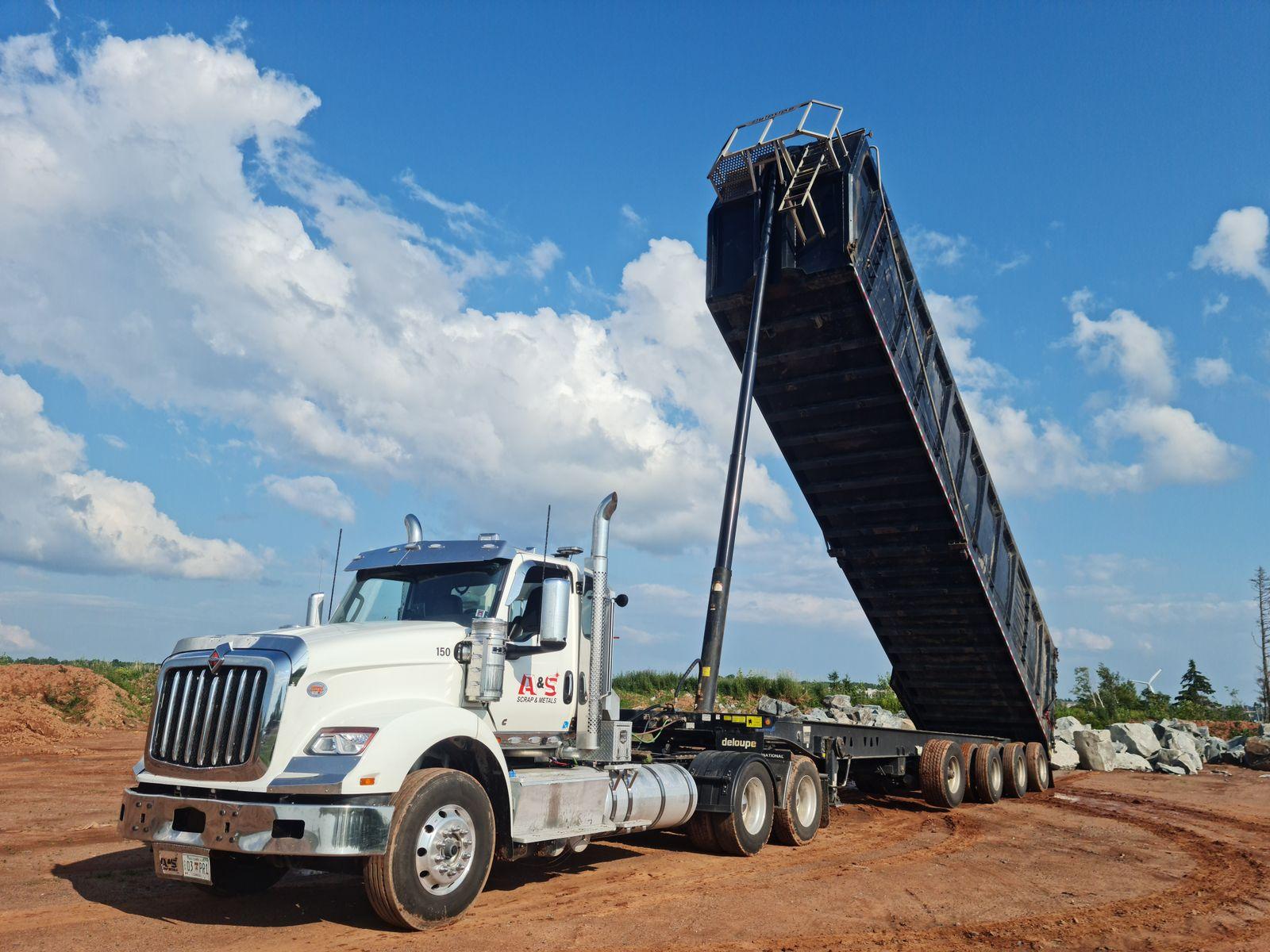
End dumps tip the load out the rear by raising the front of the tub with a hoist. They are the most common configuration for aggregate, asphalt, and demolition debris. Bottom dumps release material through gates under the tub as the trailer moves, spreading it in a windrow, and they suit paving and large-scale grading. Side dumps and live-bottom trailers serve narrower uses. Frame-type units have a heavy chassis under the tub, while frameless units use the tub as a structural member and save weight.
Tub material changes both payload and wear. Aluminum cuts weight, which allows more material per load, but it can dent and crack under heavy rock. Steel handles abuse, but it weighs more. Hardened liners extend life in abrasive work. Lenders understand all of these, and the best way to help them is to write down exactly what the seller is offering: tub material and thickness if known, hoist type, number of axles, tarp system, and the year of the chassis.
Older frame-type end dumps are plentiful and often inexpensive. They carry more repair risk than most dry van purchases, so a larger down payment and a repair reserve make sense.
Project cash flow and payment timing
Construction billing does not behave like freight billing. Progress payments, retainage, change-order disputes, and lien waivers can stretch the time between hauling a load and seeing money. A contractor who earns well on paper can still run short on cash in the month a payment lands on a trailer note.
Build the payment around your slowest billing quarter, not the busiest. Add up three months of net revenue attributable to the trailer, divide by three, and compare the result to the proposed payment. If the payment takes more than a third of that average, consider a longer term or a larger down payment.
As an illustration only, a used end dump at $88,000 with 15 percent down leaves $74,800 financed. At an illustrative 9.5 percent over 72 months the payment is near $1,367. At 60 months the same balance rises to about $1,571. Actual terms depend on the formal underwriting and the collateral.
Hydraulic and tub inspection points
The hoist is the heart of the machine. Ask to see the trailer dump with a load, or at least raise and lower the tub empty several times. Watch for slow lift, shuddering, or oil seeping at the cylinder seals. A cylinder rebuild or replacement is a significant expense, and a lender will want to know whether it is likely soon.
Walk the tub inside and out. Look for thin spots worn through the floor, cracks around the corners, and welds that have been added in layers, which often means the previous owner was patching problems. Check the tailgate or gate seals, since leakage of fines is a nuisance on public roads and can lead to citations.
Under the trailer, look at the frame rails, crossmembers, axle seats, and suspension. Cracks near the hoist mount are a red flag. Take photos with a flashlight, because dark underside shots help nobody.
- Cycle the hoist several times and watch for slow lift, drift, or leaks.
- Inspect tub floor and corners for thin spots and layered weld repairs.
- Check gate or tailgate seals and latch mechanisms.
- Examine frame rails and hoist mounts for cracks.
Titling, weight, and compliance
Dump trailers are titled and registered like other trailers, and the same documentation rules apply: a clean title or manufacturer's statement of origin, a VIN or serial number that matches the plate, and insurance naming the lienholder. States differ on how they handle trailer titles and axle configurations, so confirm the paperwork path with the seller and the registering state early.
Weight compliance is more complicated for dump work than for van freight. Axle spacing, tire ratings, and state bridge laws affect how much material you can legally haul. Overloaded dump trailers wear faster and attract enforcement attention. Know the empty weight of the trailer and the tractor combination, and plan loads accordingly.
If you haul for hire across state lines, you also need operating authority and the usual federal registrations. Intrastate haulers and contractors hauling their own materials face different rules. A lender will not give legal advice, but the file moves faster when it is clear which category you fall into.
Fleet expansion and staggered purchases
Contractors often add a second or third dump when a project award demands more capacity. Buying all at once can strain cash flow, particularly if the project is the only revenue source supporting the new units. Staggering purchases by a quarter or two, with each unit tied to work already in hand, keeps the debt aligned to income.
Show the lender the award letter, the municipal bid tabulation, or the subcontract that justifies each added unit. If the project runs twelve months and the note runs sixty, say how the trailer will earn after the project ends. A flexible unit that can haul aggregate, demolition debris, or topsoil is a better bet than one tailored to a single job.
Keep notes on each trailer's utilization. If a unit sits idle two weeks a month, that is evidence for the next conversation about whether to buy, rent, or subcontract.
Application tips for dump buyers
Include the seller's quote with every spec you can gather: year, make, tub material, hoist, axle count, and mileage on the chassis if applicable. Add photos that show the tub interior and the underside. Include your business entity documents, a recent bank statement, and a short summary of the work the trailer will do.
If you are new to the business, a larger down payment and a letter from a general contractor confirming repeat work can offset thin history. If you have prior equipment financing, your payment record on those notes is useful evidence.
Subcontract versus fleet-haul economics
Hauling as a subcontractor to a general contractor usually pays by the hour or by the load. Fleet hauling for aggregate suppliers pays by the ton or by the haul. Each has different utilization patterns and different risk. Hourly work is predictable but caps your income. Per-ton work rewards efficiency but exposes you to queue times at the pit and the plant.
Estimate revenue per working day for your trailer type, multiply by realistic working days per month, and subtract fuel, driver pay, insurance, and maintenance. What is left is the amount available for the payment. If that figure is slim, the trailer might be better as a rental or subcontract until volume grows.
Reserves, repairs, and the true cost of owning a dump
Dump work is hard on equipment. Tires scrub on tight job-site turns, brakes work hard on grades with a full load, and hydraulic hoses and fittings fail with little warning. Set aside a monthly maintenance reserve per trailer, separate from the payment, and increase it for older units. Many owners find that a modest monthly amount avoids the shock of a four-figure repair bill.
Keep records of every repair, with dates and invoices. Those records support resale value, help you decide when a trailer has reached the end of its economic life, and strengthen your file when you ask for financing on the next unit.
Putting the file together with Trailer Financing
Start with an inquiry that includes the trailer configuration, price, seller, and the contract or project it will serve. There is no credit check to inquire, and TrailerFinancing.org considers credit from 500 to 800+ FICO with amounts from $10,000 to $1,000,000 or more. Share award letters or contracts when you have them, and plan the structure around the slowest part of your billing cycle.
Load manifest · NO. ARTICLE-DUMP
Sign carrier quote request
No credit check to inquire. Opens in a new tab.
Start inquiryRelated guides
Construction Season Trailer Strategy: Timing Purchases and Financing
Align dump, flatbed, and lowboy trailer financing with construction season cash flow. $10k–$1M+. No credit check to inquire.

Private-Party Trailer Purchases: Title, Liens, and Funding Timelines
Buy a semi trailer from a private seller without funding surprises. Trailer Financing covers lien searches, state title quirks, and $10k–$1M+ deals. No credit check to inquire.

Lender Photo Checklist for Semi Trailer Financing Approvals
Speed trailer loan approvals with the photo set underwriters expect. Dry vans, reefers, dumps, and tankers—from $10k to $1M+. No credit check to inquire.