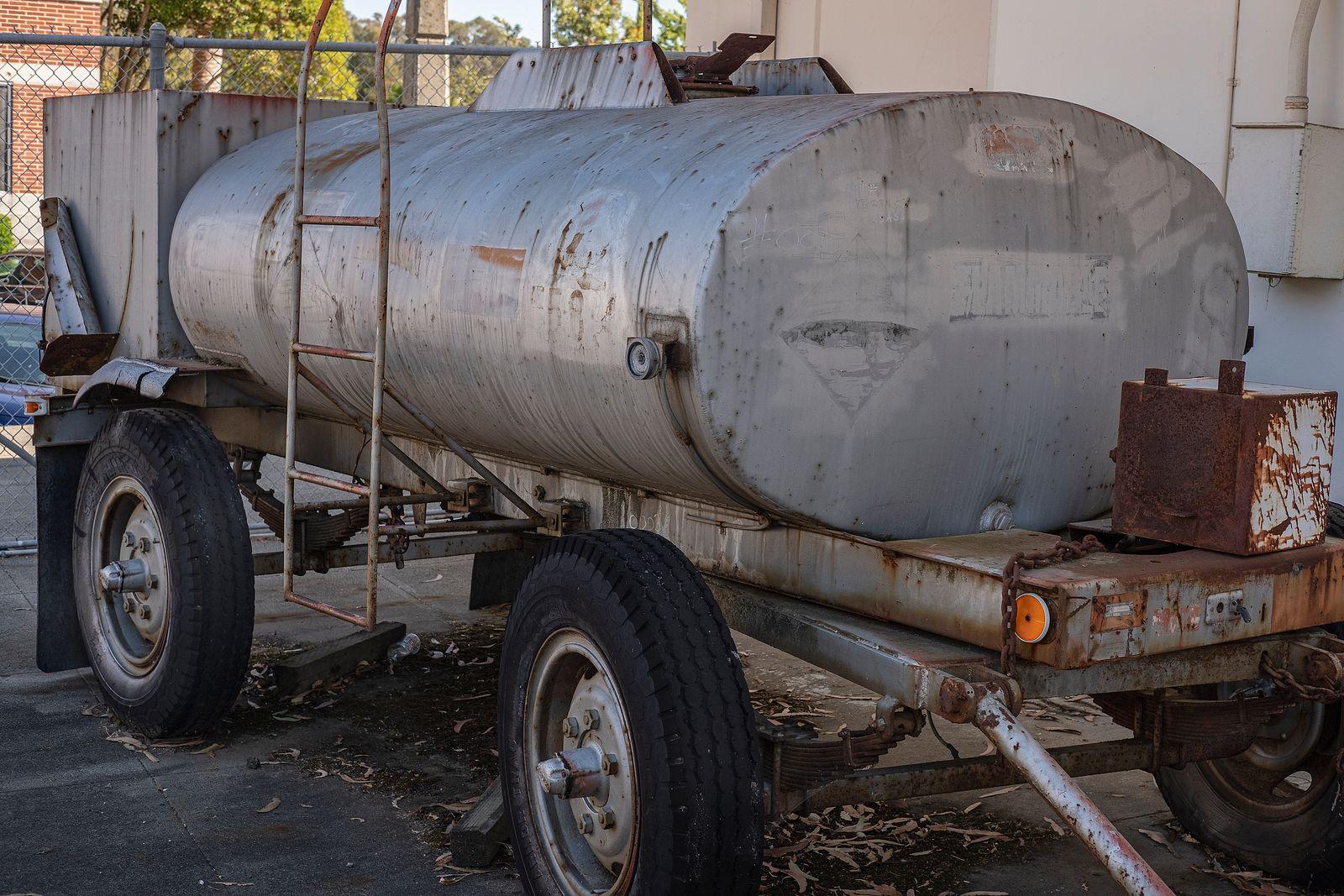
Fleet Trailer Financing: Staggered Renewals and Batch Purchases
7 min readIllustrative guidance—not an offer
Once a carrier operates more than a handful of trailers, financing stops being a series of separate decisions and becomes a portfolio question. When do notes mature? How old is the average unit? What happens to cash flow if three trailers need replacing in the same quarter? Fleets that treat trailer purchases as a schedule rather than a series of reactions keep payments steadier, avoid sudden capital calls, and usually negotiate from a stronger position with sellers and lenders. This article lays out how staggered renewals work, when batch purchases make sense, and how to present a fleet plan to underwriting.
The problem with buying everything at once
Buying a large group of trailers in one month has real advantages: simpler paperwork, possible volume pricing, and a uniform fleet. It also stacks risk. All the units hit the same maintenance milestones together, all the notes mature in the same window, and all the resale decisions land at the same time. If market conditions are poor at that moment, you may be forced to sell or refinance at a bad price.
A fleet bought in a single wave also tends to age together. After six or seven years, every tire set, every floor, and every set of brakes comes due at roughly the same moment. The repair bills arrive together, and so does the pressure to replace. Carriers who lived through that cliff often say the lesson was to spread purchases out.
None of this means batch purchases are wrong. It means they should be a choice, with a plan for what happens when the units age.
Designing a replacement schedule
A staggered schedule starts with an inventory. List every trailer by year, type, hours or condition, and note maturity date. Mark which units are paid off, which are near the end of their note, and which have the highest maintenance cost. That list shows where pressure will build.
Next, choose a target age range for the fleet. Some carriers aim to replace one in five units each year, keeping the average age steady. Others replace based on repair cost per mile. Either approach works as long as it is written down and reviewed annually. A rule such as replacing a unit when annual repair cost exceeds a set share of its value turns judgment into policy.
Finally, line up the notes. If two trailers are due to be replaced next year, consider financing the replacements at different times, so payments begin on separate dates. Lenders appreciate a plan that avoids a spike in obligations.
- Inventory by year, type, condition, and note maturity.
- A target age range or a repair-cost trigger for replacement.
- Notes arranged so maturities and new payments do not cluster.
When a batch purchase still makes sense
A new dedicated contract that requires ten trailers by a fixed date does not leave room for gradual buying. A seller offering a meaningful discount on a block of off-lease units may be worth taking in a group. A fleet consolidating from several types into a single standard may do so deliberately.
In those cases, run the numbers on the combined payment against contract revenue. As an illustration only, a six-unit order totaling $276,000 with 12 percent down leaves $242,880 financed. At an illustrative 8.5 percent over 72 months the combined payment is near $4,318, which works out to roughly $720 per trailer. Divide that by the weekly revenue each trailer is expected to generate to check coverage.
If the batch is large relative to the existing fleet, consider splitting the financing into two tranches a few months apart. The second tranche can begin after the first group has shown it performs as planned.
How underwriters read a fleet file
For a fleet request, underwriters look beyond the individual trailer. They want to see the existing equipment list, current obligations, revenue by customer or lane, and a plan that explains how the new units fit. A fleet of fifty trailers that is adding five replacements is a different conversation than a fleet of ten adding five.
Present the plan clearly. A one-page summary showing current units, units to be replaced, new units, and expected revenue impact helps. Show whether the new units replace old ones, because replacement reduces net exposure. If the old units will be sold, estimate proceeds and show how they will be applied.
Also show maintenance practices. A fleet with documented preventive maintenance and low roadside inspection violations reads as better managed, which supports longer terms and better advance rates.
Pool management and trailer-to-tractor ratios
Many fleets run more trailers than tractors so drop-and-hook programs can operate without waiting for loading. The right ratio depends on the customer. A retailer's dedicated lane may need two or three trailers per tractor, while a one-way long-haul operation may need closer to one to one. Idle trailers are payments with no revenue, so measure utilization before adding units.
Track each trailer's weeks in service. Units that sit unused for long stretches are candidates for sale rather than renewal. Selling an idle unit reduces your debt load and may fund the down payment on a unit that works harder.
Exit planning for older units
The end of a trailer's useful life in your fleet need not be the end of its value. Older units can be sold to smaller carriers, converted to storage, or traded in on new equipment. Know your options before the note matures so you are not forced into a bad sale.
Keep each trailer's records current. A sale is easier and more profitable when you can show a buyer maintenance invoices, photos, and a clean title.
Cash reserves and covenant awareness
Fleet financing often includes terms that require maintaining insurance, keeping the units in good repair, and reporting changes. Read those terms and make sure your operations can meet them. A missed insurance renewal on one trailer can lead to a default notice on the whole portfolio.
Keep a reserve equal to at least one month of fleet payments, and more if your revenue is seasonal. The reserve does nothing most months, then proves its value in the month a big customer pays late.
A worked example of staggering a twelve-trailer fleet
Suppose a regional carrier runs twelve dry vans, bought in groups of six, four, and two over the last seven years. The oldest six are approaching the point where repair bills climb, and their notes are almost paid off. Replacing all six at once would add a large payment in a single month and leave the fleet with six units of identical age again.
A staggered plan would replace two units now, two in six months, and two six months after that. Each replacement note starts on a different date, the older units come out of service as the new ones arrive, and the fleet age average stays more balanced. Total interest may be slightly higher than a single large purchase, but cash flow is smoother and the risk of a cluster of simultaneous repairs falls.
The plan also gives the carrier time to learn from each group. If the first two replacements show a recurring problem with a certain door or landing gear, the next purchase can specify something different.
Document the reasoning in a short memo for the lender. A page that explains the age profile, the replacement order, the expected payment by quarter, and the revenue the fleet generates shows a management team that plans ahead. That kind of file tends to draw better questions and fewer surprises during review.
Putting the file together with Trailer Financing
Start with an inquiry that describes the current fleet, the units to be added or replaced, and the freight behind them. There is no credit check to inquire. TrailerFinancing.org considers credit from 500 to 800+ FICO with amounts from $10,000 to $1,000,000 or more. A one-page fleet summary speeds the conversation.
Load manifest · NO. ARTICLE-FLEE
Sign carrier quote request
No credit check to inquire. Opens in a new tab.
Start inquiryRelated guides
Construction Season Trailer Strategy: Timing Purchases and Financing
Align dump, flatbed, and lowboy trailer financing with construction season cash flow. $10k–$1M+. No credit check to inquire.
High-Mileage Trailer: Equipment Loan vs. Lease Structures
Compare loans and leases on older semi trailers. Trailer Financing explains advance rates, return conditions, and $10k–$1M+ options. No credit check to inquire.
Reefer Trailer Financing: Terms, Thermo Hours, and Carrier Cash Flow
Finance temperature-controlled trailers from $10k to $1M+. Trailer Financing covers reefer collateral, unit hours, and advance rates. No credit check to inquire. Credit from 500 to 800+ FICO.